International collaborations and advanced propulsion technologies developed throughout 2026 have accelerated timelines for deep-space missions, even as astronomers prepare for a major solar eclipse on August 12.
A rare recording of a great white shark feeding in Rhode Island waters is more than a viral curiosity. It is the visible edge of a major shift in how we track the ocean's apex predators.
Recent observations of colliding galaxies and early cosmic factories are forcing astrophysicists to revise long-standing models of how the universe grew up.
A scientific analysis of the space rock that crashed into a New Jersey home in 2024 reveals a diverse array of organic compounds and evidence of salty brines on its parent asteroid.
After a one-billion-kilometre journey, China's robotic pioneer has rendezvoused with Earth's quasi-moon to pull off a daring, double-target cosmic heist.
Meteorological agencies forecast an 81 percent chance that the strengthening El Niño will become one of the most intense climate patterns of the past century.
The confirmation of an atmospheric envelope around the nearby rocky world marks a milestone in exoplanetary science, offering a new perspective on where life might persist.
For the first time since 1999, mainland Europe is about to be plunged into midday darkness. Here is why the August 12, 2026 total solar eclipse is a must-see event.
A newly discovered burial site containing well-preserved artifacts and wall paintings is yielding fresh evidence about Ramesside funerary practices and social stratification.
The observatory has captured at least five galaxies merging in the early universe, dispersing heavy elements much earlier than cosmological models predicted.
A joint study from German and Indian researchers demonstrates that light-induced quantum friction can decelerate carbon-mesh nanotubes, challenging conventional physics.
The ANCHOR atlas establishes a new threshold for neurobiology, offering an unprecedented cell-level view that promises to accelerate research into neurodegenerative diseases.
A remote impact scenario from 2182 has triggered a wave of immediate panic. But the real breakthrough is the asteroid dust currently sitting in terrestrial clean rooms.
Three years after the deadly storm system affected millions, recent research offers a critical lens on the urgent need for long-term infrastructure planning in southern Malawi.
Recent reports highlight the nanomaterial's medical viability, though analysts warn that regulatory frameworks and long-term toxicity studies remain underdeveloped.
For 15 years, two papers by the father of quantum mechanics sat in the digital naughty corner. Their reinstatement this week is a masterclass in bureaucratic absurdity.
The August 2026 total eclipse is making headlines today for good reason. With an unusual backward trajectory and a path that hits Spain right at sunset, it is a once-in-a-generation celestial show.
Japan's veteran spacecraft just screamed past a snowman-shaped space rock at 5.3 kilometres per second. It is an incredible flex that will rewrite what we know about the early solar system.
The observatory's latest images of a galaxy collision confirm its status as our premier cosmic lens. But aging components and a pipeline of next-generation instruments mean its reign is not indefinite.
Scientists have rebuilt a functional protein from the dawn of life on Earth. The breakthrough offers both a window into our origins and a structural blueprint for modern biotechnology.
A newly published observation has doubled the known population of primordial quasars, providing researchers with a substantial new dataset on supermassive black holes forming in the universe's infancy.
The Japanese space probe captured images of the 450-meter-wide asteroid from 100 million kilometers away, demonstrating precise guidance capabilities required for future planetary defense missions.
Researchers in Israel have just unveiled a system that reads unknown molecular sequences and converts their functions into plain text. Biology's oldest communication barrier is falling.
Newly released visibility charts confirm that the impending near-Earth graze of the Apophis asteroid won't just be a scientific goldmine. It is going to be the most spectacular shared human experience of the decade.
New studies suggest the century-old inoculation can remodel the central nervous system's immune environment, expanding its potential applications beyond respiratory disease prevention.
New research published in the Journal of Geophysical Research: Atmospheres indicates the planetary biosphere will survive significantly longer than previously thought, estimating an endpoint up to 1.86 billion years from now.
Researchers have confirmed the formation of a highly magnetized neutron star by analyzing the aftermath of a stellar collapse, offering an unprecedented look at extreme cosmic mechanics.
The Japanese space agency is building dialogue-based artificial intelligence to streamline data retrieval and reduce the cognitive load on ground control operators.
The agency is recruiting participants to live in isolated habitats, expanding its investment in terrestrial analogues to prepare for deep-space missions.
Simon Baron-Cohen, the pioneer of a prominent framework for understanding autism, has publicly stated the terminology is unhelpful, signaling a necessary broadening of research models.
The European Space Agency’s aging spacecraft captured dozens of active vortices in a Martian valley, reinforcing the scientific necessity of long-running missions.
JAXA’s spacecraft just intercepted a target in deep space at 18,000 kilometers per hour. The data it collected is foundational for future asteroid deflection.
A newly published preclinical study outlines a therapeutic approach that eliminates detectable tumors in models by attacking both cancer cells and their supporting environment.
A laboratory simulation using light and the release of the GWTC-5 gravitational wave catalogue have rapidly expanded the physical data available on black hole mechanics and dark matter.
The initiative aims to retain early-career researchers and accelerate indigenous innovation as part of a long-term strategy for global scientific leadership.
The newly announced CircPATH platform utilizes circular RNA biomarkers to identify the risk of symptomatic Alzheimer's disease years before onset, outperforming existing diagnostic standards.
A sudden midday tremor off the coast of Datça leaves no damage, but the lingering discrepancies over how deep it struck prove we still barely understand the ground we stand on.
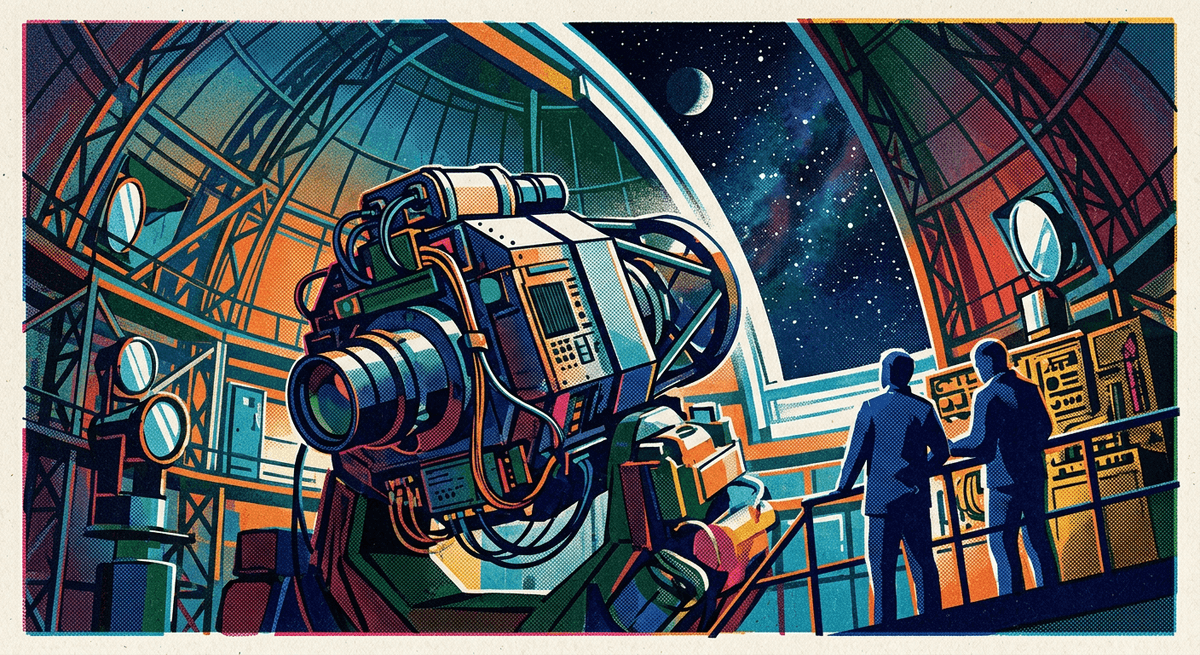
The world's largest digital camera has officially begun its ten-year survey at the Vera C. Rubin Observatory. The unprecedented imaging project is expected to fundamentally alter the current scientific understanding of dark energy and cosmic expansion.
An experiment from the University of California, Irvine, has arrived at the International Space Station, seeking new treatments for joint disease in microgravity.
The legendary explosion-hunting space telescope is falling back to Earth, and the unprecedented plan to catch it is the most thrilling thing happening in orbit right now.