
The Legacy Survey of Space and Time camera commences decade-long universe observation
The world's largest digital camera has officially begun its ten-year survey at the Vera C. Rubin Observatory. The unprecedented imaging project is expected to fundamentally alter the current scientific understanding of dark energy and cosmic expansion.
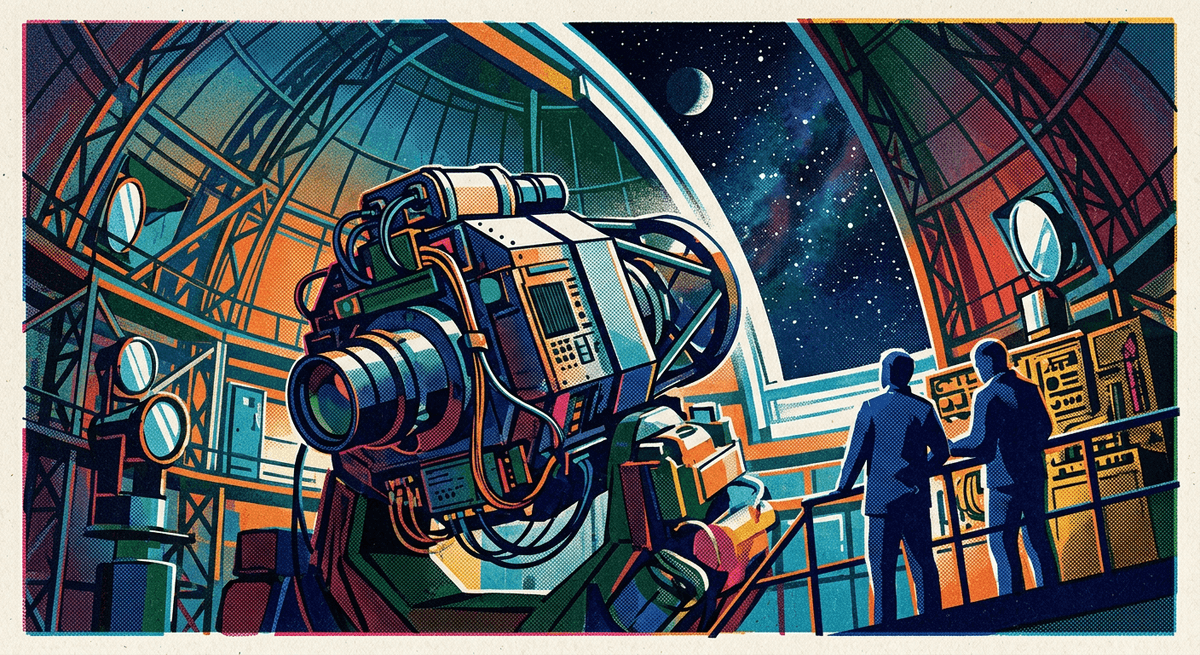
The Legacy Survey of Space and Time (LSST) has officially commenced, initiating a decade-long observational campaign of the universe. Operations are now underway using the largest digital camera ever built, housed at the NSF-DOE Vera C. Rubin Observatory.
The launch of the survey marks the beginning of an extensive deep-sky imaging project. According to project outlines, the camera will continuously capture detailed expanses of the night sky, generating an unprecedented volume of astronomical data and recording the visible universe with a resolution and frequency previously unavailable to researchers.
The primary focus of the LSST is to fundamentally transform the scientific understanding of dark energy and the mechanics driving the universe's expansion. By mapping billions of galaxies and tracking their movements over a ten-year period, the survey will provide researchers with a precise empirical foundation to observe how cosmic structures evolve and to test existing cosmological models.
Beyond the study of cosmic expansion, the observatory's deep-sky imaging capabilities are designed to systematically document transient astronomical events, ranging from distant supernovae to near-Earth objects. The resulting dataset will be shared with the global scientific community, establishing a comprehensive baseline for a new generation of astronomical research and theoretical physics.
Related stories

James Webb Space Telescope detects massive galaxy collision 800 million years after the Big Bang
The observatory has captured at least five galaxies merging in the early universe, dispersing heavy elements much earlier than cosmological models predicted.

Scientific milestones and upcoming August eclipse position 2026 as landmark year for space exploration
International collaborations and advanced propulsion technologies developed throughout 2026 have accelerated timelines for deep-space missions, even as astronomers prepare for a major solar eclipse on August 12.

The James Webb Space Telescope is systematically dismantling our timeline of the early universe
Recent observations of colliding galaxies and early cosmic factories are forcing astrophysicists to revise long-standing models of how the universe grew up.