
How the Austrian Grand Prix confirmed Mercedes' structural grip on 2026
George Russell's victory at the Red Bull Ring was more than a single-race triumph. It demonstrated an operational shift in the balance of F1 power, even against a recovering Max Verstappen.
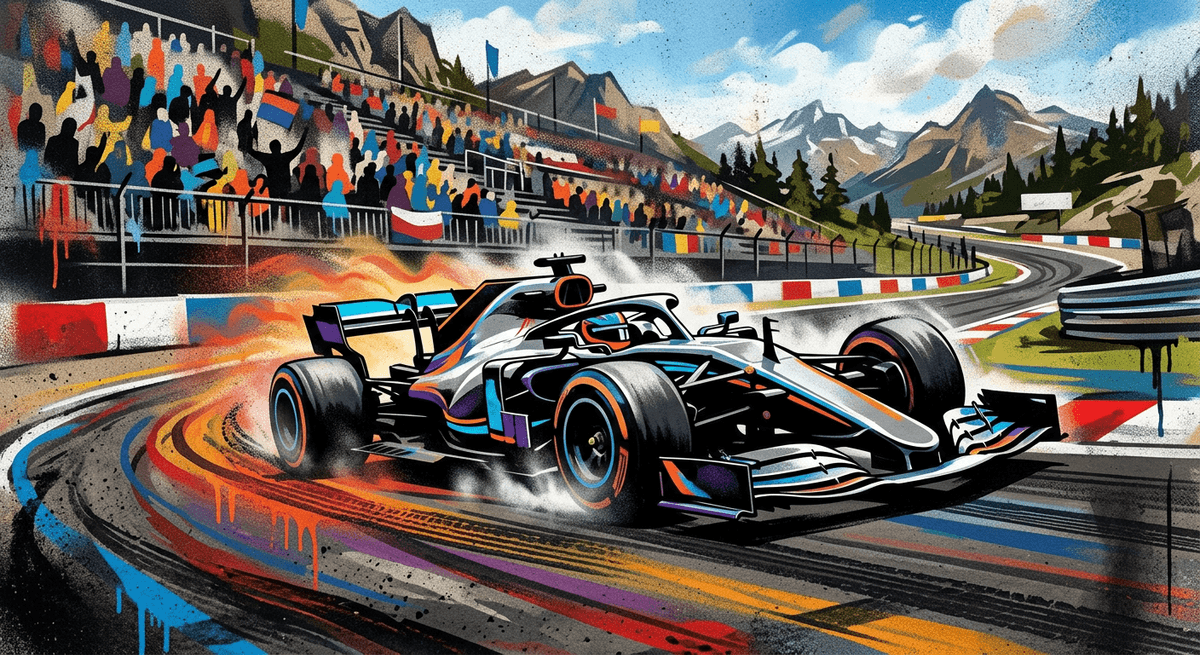
The Red Bull Ring is historically a venue that clarifies the competitive order of a Formula 1 season. Sunday’s Austrian Grand Prix served precisely this purpose, confirming a shift in the championship hierarchy that has been building since the opening rounds. George Russell secured his second victory of the year for Mercedes, executing a controlled drive from a controversial pole position. The result at Spielberg paints a distinct picture of the current grid: Mercedes holds the structural advantage in 2026, and they are efficiently converting it into points.
Russell’s path to the top step of the podium was not without friction. His pole position on Saturday survived stewards' scrutiny, as he avoided a formal investigation for a yellow flag infringement during his qualifying lap. In previous seasons, a marginal call like that might have been a minor footnote in a Red Bull procession. This year, it provided the track position Mercedes required to dictate the race. Once in clear air, Russell held off the field, proving that the current iteration of the Mercedes has the sustained race pace to match its single-lap speed.
The primary threat on Sunday came from Max Verstappen, whose weekend was defined by damage limitation. Following a major crash during qualifying, the Red Bull driver delivered a methodical recovery drive to finish second. The Red Bull remains a highly capable machine, and Verstappen’s ability to slice through the pack confirms the fundamental speed of the car. However, the necessity of that recovery highlights the operational pressure the team is currently under. They are forcing the issue to match Mercedes, and structural mistakes are beginning to compound.
The broader context of Mercedes’ strength was cemented by the driver crossing the line in third. Kimi Antonelli, the 19-year-old Mercedes driver, rounded out the podium and retained his position as the overall championship leader. Having a teenager consistently operating at the front while his teammate secures race wins demonstrates a rare operational harmony. Mercedes is extracting maximum value from both sides of the garage, a dynamic that currently eludes their primary rivals.
Further down the order, Oscar Piastri’s fourth-place finish for McLaren—his strongest showing since the Miami Grand Prix—clarified the distance between the leaders and the chasing pack. But the weekend ultimately belonged to the operation in Brackley. The Austrian Grand Prix proved that beating Mercedes in 2026 requires flawless execution. Verstappen’s qualifying crash handed them an opening, and Russell’s pole controversy gave them the edge, but it is their ability to seamlessly capitalise on these margins that defines a title-winning team. Red Bull may still have the raw pace to challenge, but Mercedes has the momentum, the consistency, and the mathematics firmly on their side.
Related stories

Charles Leclerc wins 2026 British Grand Prix amid late Verstappen crash
The Ferrari driver claimed his first victory since 2024 at Silverstone, in a race marked by a late Safety Car and mechanical failures for the pole-sitter.

The beautiful, bruised grid of the 2026 Hungarian Grand Prix
A chaotic qualifying session has shattered the expected order at the Hungaroring, leaving Lando Norris on pole and a pack of penalized, spinning giants hot on his heels.

Why the 2026 Formula 1 World Championship is the thriller we were promised
Mercedes and Kimi Antonelli may be dominating the standings, but a radical slate of new regulations has transformed the on-track action into a high-speed chess match.